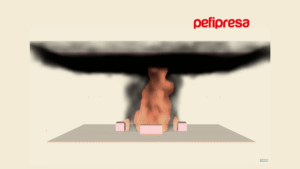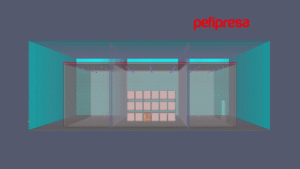
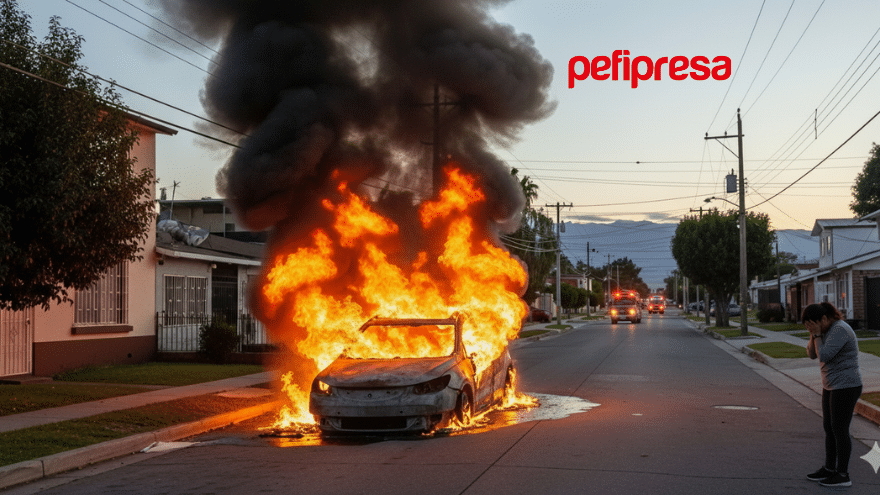
Lithium batteries are present in almost everything: from mobile phones and laptops to electric vehicles and large energy storage systems. Their capacity to transform industries is undeniable, but so is their risk: the fires they cause are very different from conventional ones.
At Pefipresa we work with this challenge daily and here we tell you the essentials to understand and face it with the best specialized detection and alarm systems solutions.
Why can lithium batteries catch fire so violently?
The phenomenon is called thermal runaway. It occurs when the battery generates more heat than it can dissipate, initiating a chain reaction that raises the temperature to more than 1,000°C in a matter of seconds.
This cascade of chemical reactions occurs when the positive electrode materials begin to decompose, internal separators lose their integrity and the liquid electrolyte vaporizes, generating extreme internal pressure that can cause explosions and the massive release of flammable and toxic gases.
What makes a lithium fire different from a conventional one?
Lithium battery fires have unique characteristics that make them extremely dangerous and difficult to control. Understanding these particularities is fundamental to implementing adequate protection measures.
They spread instantaneously from one cell to another in a chain reaction, generate toxic and corrosive gases such as hydrogen fluoride (HF), do not need external oxygen to sustain themselves, can reignite up to 72 hours after initial control, and emit incandescent fragments increasing the risk of explosion.

In short: extinguishing the flames is not enough, heat must be controlled for hours to prevent reignition. Traditional extinction methods are ineffective against this type of fire, which is why specialized extinction systems specifically designed to face these challenges are required.
Exceptional resistance to conventional extinction
Unlike traditional fires, lithium battery fires maintain combustion autonomously without the need for external oxygen. This means that even if oxygen is eliminated from the environment, the fire can continue burning thanks to the internal chemical reactions that occur in the cells.
This characteristic makes conventional extinguishing agents such as water or CO₂ have limited effectiveness. The main objective in these cases is not immediate extinction, but sustained cooling to prevent thermal propagation to adjacent cells and control temperature during prolonged periods that can extend from 24 to 72 hours.
What are the most concerning toxic gases?
The most dangerous is hydrogen fluoride (HF), highly corrosive and lethal even in low concentrations. This chemical compound can cause severe damage to the respiratory system and tissues it contacts, representing a severe risk for people in the vicinity of the fire.
In addition to hydrogen fluoride, during combustion other dangerous compounds are released such as carbon monoxide (CO), carbon dioxide (CO₂) and volatile hydrocarbons. Specialized studies have demonstrated that these fires can generate concentrations of toxic gases up to 50 times higher than those of traditional combustible materials.
This characteristic makes it essential to have adequate ventilation systems and specific evacuation protocols that consider the particular nature of these gases. The National Fire Protection Association has documented numerous cases where inadequate management of these toxic gases has resulted in serious harm to people who were initially in areas considered safe.
Which industrial sectors are most exposed?
Practically all sectors that depend on large-scale energy storage face these risks. The massive adoption of lithium battery technologies in industry has created new safety challenges that require specialized solutions.
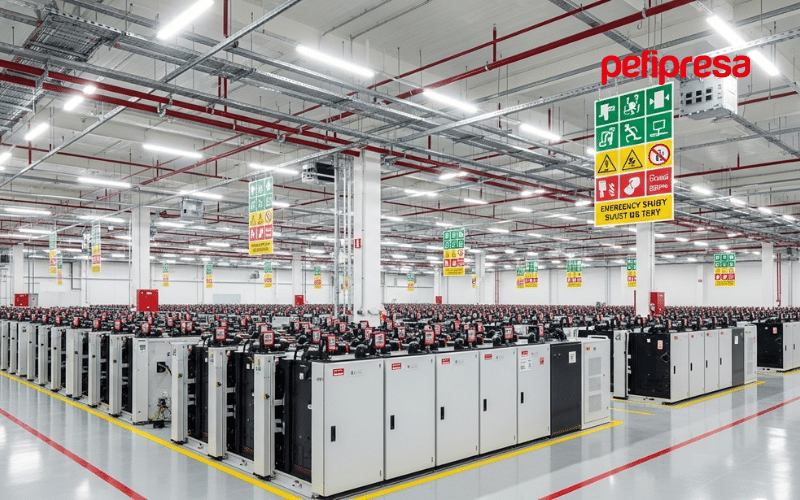
Critical sectors requiring specialized protection
Renewable energy with BESS systems (massive energy storage) represent one of the greatest challenges, as they concentrate enormous amounts of energy in relatively small spaces. These systems can store from several megawatt-hours to gigawatt-hours of energy, which exponentially multiplies the risk in case of incident.
Data centers and computing centers use lithium batteries as uninterruptible power supply (UPS) backup systems. A fire in these facilities not only represents a safety risk, but can cause critical interruptions in essential services that depend on the operational continuity of these centers.
The electric automotive industry and testing laboratories handle large quantities of high-capacity batteries daily. Manufacturing, assembly and testing facilities for electric vehicles require specific safety protocols and protection systems designed to manage the particular risk these components represent.
Logistics platforms with rapid fleet charging for electric vehicles concentrate multiple vehicles and charging stations in enclosed spaces, creating a high-risk environment where an incident in a single unit can spread rapidly. These spaces require early detection systems and specialized protection to minimize risks.
Finally, critical infrastructures such as ports and electrified mining are increasingly adopting large-capacity electric equipment and vehicles. In these cases, a fire can paralyze critical operations and endanger lives and high-value assets, making it essential to have comprehensive protection solutions.
How to detect a failure before a fire occurs?
Early detection is key to preventing catastrophic incidents. Today there are systems that combine sensors, artificial intelligence and gas analysis that can anticipate a failure up to 15 minutes before the fire, sufficient time to activate emergency and evacuation protocols.
Every second counts in detecting anomalies in lithium batteries. Anticipation can make the difference between a controlled scare and a catastrophe with significant material and human losses.
Most effective early detection technologies
Automatic thermographic cameras use infrared technology to detect anomalous temperature gradients on battery surfaces. These systems can identify hot spots indicating the beginning of thermal runaway long before visible flames or smoke occur.
Distributed fiber optic sensors provide continuous temperature measurement throughout the entire installation. This technology allows simultaneous monitoring of thousands of points with exceptional precision, detecting temperature increases of just a few degrees that could indicate the beginning of a problem.
Spectroscopic gas analysis identifies the presence of specific compounds such as CO, CO₂, HF and hydrocarbons released during the early phases of thermal runaway. This technology can detect minimum concentrations of these gases, providing early warnings before the fire manifests visibly.
Acoustic detection of internal microfailures uses high-frequency sensors that capture characteristic sounds of internal cell degradation. These systems can identify acoustic patterns associated with incipient short circuits, mechanical deformations or decomposition of internal materials.
Modern battery management systems (BMS) integrate multiple monitoring technologies that continuously analyze parameters such as voltage, current, internal resistance and temperature. Using artificial intelligence algorithms, these systems can predict failures with remarkable precision, allowing preventive interventions before a serious incident occurs.
What extinction systems really work?
Water or CO₂ are not sufficient to control these fires. Lithium fires are self-feeding and require specific systems designed to face their unique combustion characteristics.
Available specialized suppression technologies
Water mist systems apply microscopic droplets that maximize contact surface with flames and hot surfaces, achieving efficient cooling without spreading the fire. This technology uses less water than conventional systems, reducing collateral water damage.
Immersion systems in special containers allow isolation of affected battery modules, submerging them in water tanks or special solutions to control temperature and prevent propagation to adjacent units. This technique is especially effective for electric vehicle batteries.
Clean agents and specialized gases such as Novec 1230 or FM-200 provide suppression without leaving residue, being ideal for protecting sensitive electronic equipment in data centers or technical rooms. These agents act by interrupting the combustion chemical reaction at molecular level.
Liquid nitrogen is used in emergency applications where extremely rapid cooling is required. Its application drastically reduces the temperature of affected cells, stopping the propagation of thermal runaway, although it requires special handling protocols due to its low temperatures.
Reactive thermal barriers are special materials that activate automatically when detecting critical temperatures, forming an insulating layer that prevents heat transmission to adjacent cells or modules. This technology provides a complementary passive defense line to active suppression systems.
What regulations and standards should you know?
Regulations are advancing rapidly to adapt to the challenges posed by energy storage technologies. Knowing and complying with these standards is fundamental to guarantee facility safety and legal compliance.
Essential references of the current regulatory framework
NFPA 855 constitutes the key standard for energy storage systems, establishing minimum requirements for installations exceeding 20 kWh. This standard specifies separation criteria, automatic detection, sprinkler systems and special requirements for large-capacity installations.
The UL 9540 standard defines safety requirements for energy storage equipment, covering aspects such as fire resistance tests, thermal runaway propagation evaluation and thermal management requirements. This standard is widely recognized in the industry and frequently required by insurers.
The IEC 62933 series of standards provides international references for electrical storage systems, addressing technical, safety and performance aspects that facilitate harmonization of criteria globally.
In Spain, the CTE DB-SI and REBT establish minimum requirements applicable in national territory. The Technical Building Code in its Basic Document on Safety in Case of Fire and the Low Voltage Electrical Regulations must be considered together with international standards to ensure complete regulatory compliance.
How does Pefipresa address this challenge?
At Pefipresa we have developed a comprehensive fire protection ecosystem for lithium battery installations. Our approach combines decades of experience in the sector with the most advanced technologies available in the market.
Our specialized approach includes
We perform personalized risk assessments that consider specific factors such as total installed energy capacity, cell density, thermal flow patterns, existing ventilation systems and particular architectural characteristics of each installation.
Our engineering team designs advanced detection solutions integrating multiple technologies such as thermal sensors, gas analysis, electrical monitoring and predictive artificial intelligence algorithms. This multilayer approach guarantees the earliest possible detection of any anomaly.
We implement specialized suppression technologies adapted to each specific sector. From water mist systems for logistics warehouses to clean gaseous agent solutions for data centers, we select the optimal technology for each particular application.
We provide integration with existing systems, ensuring that new protection solutions communicate effectively with building management systems, alarms, ventilation and other critical installation components.
It is not about adapting conventional systems, but applying a specialized discipline that combines experience, electrochemical knowledge and innovative solutions designed specifically for the unique risks of lithium batteries.
Additionally, we offer predictive and corrective maintenance services following the strictest regulatory standards, including current fire protection maintenance regulations. Our maintenance programs ensure that all protection systems maintain their operational effectiveness over time.
We also provide specialized training for operations personnel and emergency teams, training them in specific protocols for action against lithium battery fires. This training includes theoretical aspects about the behavior of these fires and practices on the use of specialized extinction equipment.
Conclusion
Lithium batteries are the engine of energy transition, driving everything from electromobility to renewable energy storage. However, they also represent an emerging risk that cannot be ignored or underestimated.
The difference between a controlled incident and a catastrophe lies in knowing the risk in depth, detecting it in time through advanced technologies, and applying protection systems designed specifically for this type of fire.
At Pefipresa we are committed to leading this specialization and accompanying companies from all sectors in protecting their facilities. Our experience of more than 50 years in fire protection, combined with our specialized knowledge in lithium battery technologies, positions us as the ideal partner to face these challenges.